
Vaccines Aren't Just for Children: Adult Vaccinations Worth Discussing
Dr. Khanna's X-Ray & Laboratory · 8 August 2026 · 3 min read
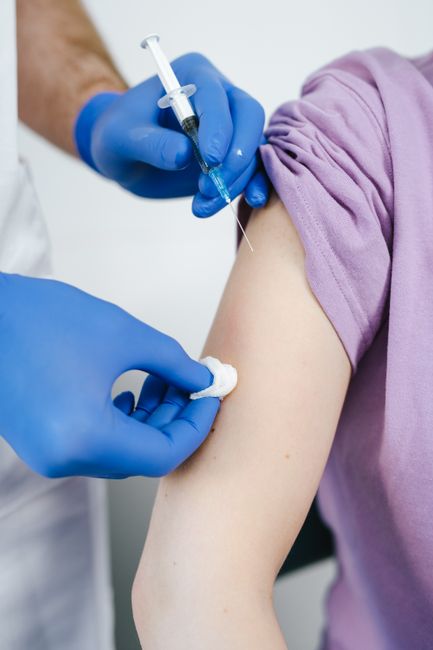
The card that should never have stopped at childhood
Most Indian adults last saw a vaccination card when their school demanded one, and the assumption settled in that immunisation is children's business. It is a costly assumption: the protection from some childhood vaccines fades with the decades, new risks arrive with age, pregnancy, chronic disease and certain jobs, and a few excellent vaccines simply did not exist when today's adults were young. Adult immunisation is standard preventive medicine worldwide, and the conversation belongs in the same annual visit as blood pressure and sugar. What follows is the shortlist we most often discuss across the family's generations.
Tetanus: the ten-year rule everyone forgets
Tetanus bacteria live in soil and dust everywhere, entering through wounds as trivial as a rusty nail scratch or a cut sustained while gardening, and the disease they cause remains dreadful. Childhood doses do not last a lifetime; immunity needs a booster roughly every ten years through adult life, and most adults are overdue without knowing it. Doctors now often use a combined booster that refreshes protection against diphtheria and whooping cough at the same time, the latter mattering for anyone who will be around a newborn, since adult whooping cough is mild for the adult and dangerous for the infant. If you cannot name the year of your last tetanus shot, that is your answer.
The annual flu vaccine: for the household's vulnerable
Influenza is dismissed as a seasonal nuisance by the healthy, and for them it usually is, but for people over sixty-five, pregnant women, young children and anyone with diabetes, heart, lung or kidney disease, it is a regular cause of pneumonia and hospital admission. The vaccine is reformulated each year against circulating strains, so it is an annual appointment, ideally just before winter in North India. It halves the household's risk another way too: vaccinated younger members stop carrying the virus home to the grandmother whose heart cannot afford the fever. Families with one vulnerable member do best vaccinating around that person, not just the person alone.
Pneumococcal vaccines: pneumonia cover for elders
The pneumococcus is the classic bacterial cause of serious pneumonia in older adults, and vaccines against it substantially reduce the severe, invasive forms of the disease. Generally accepted guidance offers pneumococcal vaccination to adults from sixty-five, and earlier to those with chronic heart, lung, liver or kidney disease, diabetes, absent spleen or weakened immunity. Unlike the flu shot this is not an annual affair; depending on the vaccine used, it is a one-time dose or a short planned sequence your doctor will map out. For a diabetic in the seventies, the flu and pneumococcal pair is among the highest-value preventive steps on offer.
Hepatitis B and typhoid: driven by exposure
Hepatitis B spreads through blood and intimate contact and can smoulder into cirrhosis and liver cancer decades later; a safe, effective three-dose vaccine has existed for years, and adults who missed it, healthcare and laboratory workers, household members of a hepatitis B carrier, dialysis patients, and frankly any unvaccinated adult who wants the protection, can complete the course at any age, with a blood test first to check existing status. Typhoid vaccination is worth discussing in a country where the disease remains common; it gives partial, time-limited protection, so it suits frequent street-food eaters and situations of higher exposure, and it never replaces safe water and food habits.
HPV and shingles: the age-window pair
Two vaccines bracket adult life. The HPV vaccine, best known for preventing cervical cancer, works ideally in the school-age years but remains standard catch-up guidance through the mid-twenties, and selected older adults may benefit after individual discussion. At the other end waits shingles: the chickenpox virus every adult carries dormant in nerve roots can reawaken in later decades as a blistering, burning rash whose nerve pain can persist for months. An effective vaccine is generally offered from age fifty onwards, and anyone who has watched a parent endure post-shingles neuralgia rarely needs persuading about it.
Building the family's vaccine plan
Bring whatever records exist, even a faded card, to a routine visit and let the doctor reconstruct each adult's status; where records are lost, safe assumptions and occasional blood tests fill the gaps. Priority goes to the household's vulnerable: elders, the pregnant, more so because pregnancy carries its own specific recommendations that must be taken only on medical advice, and every diabetic and heart or lung patient, in whom infections run harsher. Expect a plan spread over months rather than a single day of injections, mention allergies and past reactions, and keep the new card somewhere the whole family can find, because this list, unlike childhood's, is never quite finished.
Questions patients ask
I had all my childhood vaccines. Am I not covered for life?
Some protection lasts decades, but tetanus needs boosting roughly every ten years, flu changes yearly, and vaccines like hepatitis B, HPV and shingles may never have been given at all. A records review with your doctor settles what remains.
Can vaccines be taken safely with diabetes or blood-pressure medicines?
Yes. Chronic illness is usually a reason for more vaccination, not less, since infections hit harder. Mention all medicines and allergies beforehand; only a few situations, like some immune-suppressing treatments, change which vaccines are suitable.
Is it harmful if I take a booster earlier than needed, or repeat a dose?
An extra or early dose of common adult vaccines is generally safe, perhaps a sorer arm, so uncertainty about old records is not a reason to avoid vaccination. Your doctor will judge dose timing case by case.
Suggested articles

Prediabetes Is a Fork in the Road: How to Take the Right Turn
Prediabetes is the one stage of diabetes that can be walked back: the numbers that define it, the mechanism behind it, and the levers that reverse it.
27 August 2026 · 4 min read
Iron Deficiency in Women: Why It Hides Behind Just Feeling Tired
Monthly losses, depleted ferritin and a normal haemoglobin: how iron deficiency hides in women, the tests that expose it, and what refills the tank.
26 August 2026 · 4 min read
High Uric Acid: The Diet Changes That Move the Number
Which foods genuinely raise uric acid — sugary drinks, alcohol, organ meats — which are wrongly blamed, and the habits that bring the number down.
25 August 2026 · 4 min read