
Checking Blood Pressure at Home: Getting Numbers You Can Trust
Dr. Khanna's X-Ray & Laboratory · 25 April 2026 · 3 min read
Why home readings can beat clinic readings
Blood pressure measured in a clinic carries a built-in distortion: for many people, the sight of a white coat and the small stress of the visit raises pressure by several points, while a smaller group relax at the clinic and run higher at home. Home monitoring, done correctly, samples your pressure in real life, across mornings and evenings, workdays and Sundays, and doctors increasingly trust a week of good home readings over a single clinic number when deciding whether to start or adjust medicines. The catch is in the phrase "done correctly", because casual technique routinely produces numbers ten or fifteen points wrong in either direction.
Buying the right machine, and the cuff detail everyone misses
An automatic upper-arm machine from an established brand is the right choice for home use; wrist and finger devices are far more sensitive to position and best avoided. The detail that actually corrupts readings is cuff size: a cuff too small for a heavy arm squeezes late and reads falsely high, while an oversized cuff on a thin elderly arm reads falsely low. Check the range printed on the cuff against the mid-upper-arm circumference of the person who will use it most. Once a year, carry your machine to the clinic and compare it against ours so drift is caught early.
The five minutes before the button matters most
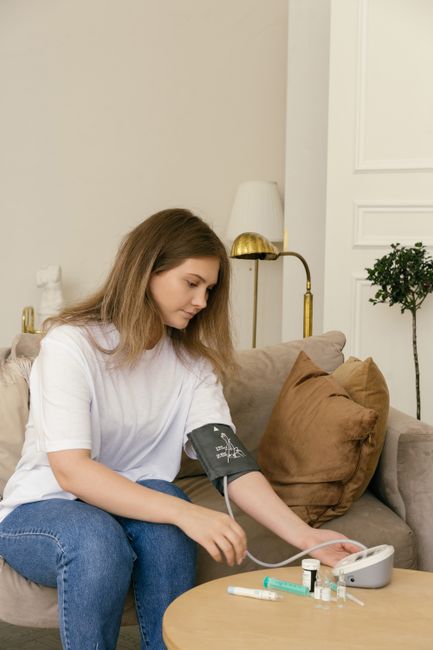
The measurement begins before the machine does: sit quietly for five minutes first, in a chair with back supported, both feet flat on the floor, legs uncrossed, and the cuffed arm resting on a table at the level of the heart. An arm hanging low reads high, crossed legs add several points, and a full bladder adds more. For thirty minutes beforehand, skip tea, coffee, tobacco and exercise, all of which raise pressure transiently. Wrap the cuff on bare skin or over one thin layer, never over a rolled-up thick sleeve that acts as a tourniquet, and do not talk or scroll your phone during the reading.
A routine that produces data, not noise
Single scattered readings mislead, because blood pressure naturally swings through the day with activity, meals, stress and sleep. When you or your doctor need a proper picture, follow the standard pattern: two readings a minute apart, morning before medicines and breakfast, and again in the evening, for seven consecutive days, recording every value with date and time in a notebook or phone. Doctors typically discard the first day and average the rest, and that average is the number treatment decisions rest on. Between assessment weeks, a couple of readings weekly is plenty for a person whose pressure is stable.
Reading the numbers without panicking
A home average under about 135 over 85 is generally considered controlled, slightly lower than the clinic threshold, though your own doctor may set a different target based on age, diabetes or kidney disease, and their target overrides any article. Expect variation of ten or more points between readings; that is physiology, not machine failure. What deserves attention is the pattern: a rising weekly average, or repeated readings above 160 over 100. What deserves urgent attention is a very high reading above roughly 180 over 120 accompanied by chest pain, breathlessness, severe headache, visual disturbance or weakness, which means a hospital now, not a repeat measurement tomorrow.
The mistakes we see most often
Checking only when feeling unwell tops the list, because pressure measured during a headache or an argument is guaranteed to be high and teaches nothing about your baseline. Stopping tablets because a week of readings looked good comes second, and it is genuinely dangerous: the readings are good because of the tablets, and unmanaged pressure quietly damages heart, brain and kidneys for years before it announces itself. Obsessive measuring many times a day sits at the other extreme, feeding anxiety that itself raises pressure. Measure on schedule, record honestly, including the high ones, and let your doctor interpret the trend.
Bringing it all to the clinic
Bring the machine and the record book to your reviews, because the notebook turns a five-minute consultation into a precise one: the doctor can see morning versus evening patterns, weekend differences, and the response to any medicine change since the last visit. Mention anything unusual alongside the numbers, dizziness on standing, ankle swelling, missed doses, a new medicine from another doctor, since context changes interpretation. Home monitoring works best as a partnership in which you supply honest data and the clinic supplies judgement, and together the two catch problems years before they would otherwise surface.
Questions patients ask
Which arm should I use for blood pressure?
First measure both arms in the same sitting; a small difference is normal, and the arm reading higher becomes your regular measuring arm. Mention a difference above twenty points to your doctor, as it occasionally signals a circulation problem worth examining.
My readings jump around from day to day. Is the machine faulty?
Usually not. Blood pressure genuinely varies with sleep, salt, stress and time of day, which is exactly why doctors use a seven-day average rather than single values. Suspect the machine only if it disagrees with a clinic reading taken minutes apart.
What time of day is best for checking BP?
Morning before medicines and breakfast, and again in the evening, is the standard pattern because it captures both ends of your daily cycle. Consistency matters more than the exact hour, so pick times you can repeat daily and stick to them.
Suggested articles

Vitamin B12 on a Vegetarian Diet: Signs, Tests and Fixes
Why vegetarian diets run low on B12, the nerve and blood symptoms that creep in over years, which tests to ask for, and how to correct it safely.
19 August 2026 · 4 min read
Vitamin D and Indoor Life: Why Sunny Countries Still Run Low
Why vitamin D deficiency thrives in sunny India and the US alike: the indoor-life problem, symptoms, the 25-OH test, and safe sensible correction.
17 August 2026 · 3 min read
HDL, LDL and Triglycerides: Reading Your Cholesterol Report
A plain-language tour of the lipid profile: what LDL, HDL and triglycerides each do, the targets that matter, and which numbers move with which habits.
17 August 2026 · 4 min read