
Pranayama for Beginners: Three Breathing Practices Worth Learning
Dr. Khanna's X-Ray & Laboratory · 13 June 2026 · 3 min read
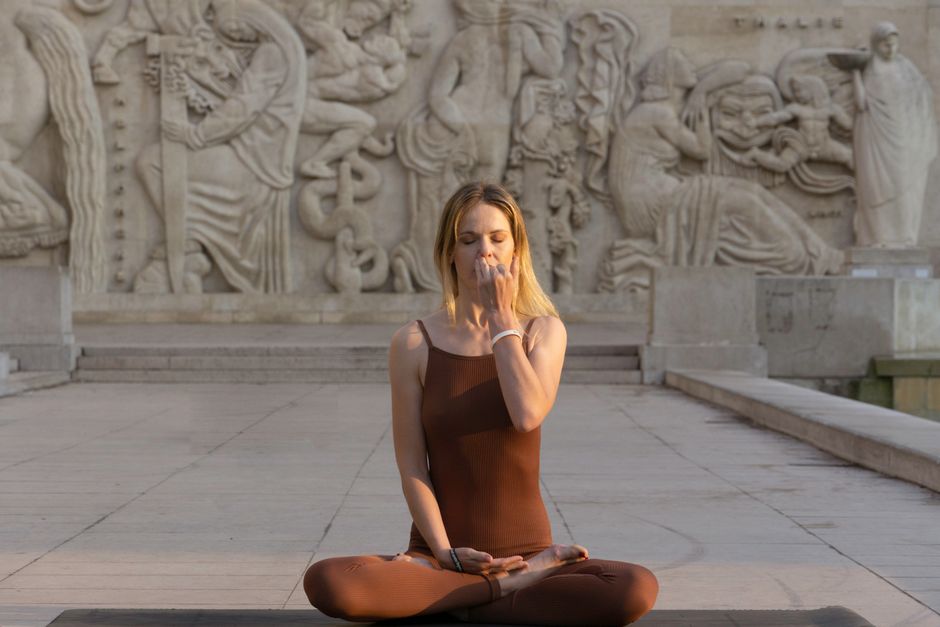
What slow breathing changes inside the body
Breath is the one function of the automatic nervous system that we can also steer deliberately, and that is exactly why pranayama works. When exhalation becomes long and smooth, stretch receptors in the lungs and the vagus nerve signal the brain that the situation is safe, and the body answers by slowing the heart, easing blood vessel tension and dialling down stress hormones. Rapid shallow chest breathing does the opposite, feeding the loop of anxiety. None of this is mystical; it is respiratory physiology that a beginner can feel within five minutes of honest practice.
Setting up: posture, timing and an honest empty stomach
Sit on a chair or cross-legged on a folded blanket with the spine comfortably tall, because a slumped chest physically cannot let the diaphragm descend fully. Early morning suits most households, before the phone begins its demands, though any quiet fifteen minutes works. Practise at least two to three hours after a full meal, since a loaded stomach pushes up against the diaphragm and makes deep breathing laboured. Loosen tight waistbands, rest the hands on the thighs, and keep the face soft; gritted teeth and a tense jaw quietly sabotage every breathing practice. Keep a fixed spot in the house for the sitting too, because the body learns the cue and begins settling the moment it arrives in the familiar corner.
Practice one: belly breathing, the foundation
Place one palm on the chest and one on the navel. Inhale slowly through the nose so that the lower hand rises while the upper hand stays almost still, which means the diaphragm is descending and drawing air into the deepest part of the lungs. Exhale even more slowly, feeling the belly fall. Work towards inhaling for a count of four and exhaling for six, and continue for five minutes. The lengthened exhale is the active ingredient, because the heart naturally slows during exhalation. Master this before anything fancier; most beginners breathe backwards, chest first, without realising it.
Practice two: anulom vilom, the alternate-nostril breath
Fold the index and middle fingers of the right hand towards the palm, leaving the thumb, ring and little fingers free. Close the right nostril with the thumb and inhale slowly through the left. Close the left nostril with the ring finger, release the thumb, and exhale through the right. Inhale through the right, close it, and exhale through the left; that completes one round. Continue for five to seven minutes at a gentle, unhurried pace with no holding of breath at this stage. The forced slowing and the attention the pattern demands make this the most reliably calming practice we teach.
Practice three: bhramari, the humming-bee breath
Sit tall, close the eyes, and gently block the ears with the thumbs or index fingers. Inhale through the nose, then exhale making a soft, steady humming sound like a bee, feeling the vibration fill the head and chest. One exhale lasts ten to fifteen seconds; do five to seven rounds. The extended humming exhale slows the breath dramatically, and the vibration gives restless minds something physical to rest on, which is why bhramari suits people who find silent practices frustrating. Many of our patients use two or three rounds at night as a reliable doorway into sleep.
The mistakes that make beginners give up
Forcing the breath is the classic error: pulling in air aggressively or stretching counts beyond comfort produces dizziness, tingling around the lips and a feeling of suffocation, all signs of overbreathing rather than progress. If any of these appear, stop, breathe normally, and resume more gently; the practice should feel like slowing down, never like effort. Do not confuse these calm practices with kapalbhati, the rapid abdominal pumping, which is a different, stronger technique unsuited to unsupervised beginners. Irregular practice is the other quiet killer; five minutes daily builds what forty minutes on Sunday cannot.
Cautions, and when to check with your doctor first
These three gentle practices are safe for most people, including elders, but a few situations need medical advice first: recent heart attack or unstable heart disease, an asthma or COPD flare-up where breathing is already laboured, recent chest or abdominal surgery, and severe uncontrolled blood pressure. Avoid any breath retention in pregnancy and in glaucoma; the three practices above involve none. Pranayama supports treatment for blood pressure, anxiety and asthma, but it replaces no inhaler and no tablet. Stop and consult us if practice brings chest pain, palpitations, faintness or breathlessness that does not settle within a minute.
Questions patients ask
How long before I notice any benefit?
Calming effects appear within a single session; steadier changes in sleep, blood pressure and anxiety usually take four to six weeks of near-daily practice. Keep sessions short enough that you never skip them.
Can children and elderly people do these practices?
Yes. Belly breathing and bhramari suit children from around school age, and all three suit elders sitting on a chair. Keep durations shorter and never enforce breath counts that feel like strain.
Is it normal to feel slightly dizzy during anulom vilom?
Mild light-headedness means you are breathing deeper or faster than your body needs. Pause, breathe normally until it clears, then restart at a gentler pace. Persistent dizziness deserves a check-up.
Suggested articles

Kapalbhati: Real Benefits, Real Cautions, Proper Technique
Kapalbhati without the hype: what the rapid-exhalation practice actually does, exact technique, who must not do it, and the signs you are overdoing it.
23 August 2026 · 4 min read
Yoga or Gym After 40? How to Split the Week
After 40 the real question is not yoga versus gym but how to split the week: what each does that the other cannot, and a workable seven-day plan.
22 August 2026 · 4 min read
Anulom Vilom: Alternate-Nostril Breathing, Step by Step
Learn anulom vilom properly: the hand position, the breathing sequence, common mistakes, who should avoid breath-holding, and how to build a practice.
22 August 2026 · 4 min read