
Gentle Yoga for Seniors: Safe Poses With Chair Support
Dr. Khanna's X-Ray & Laboratory · 23 June 2026 · 3 min read
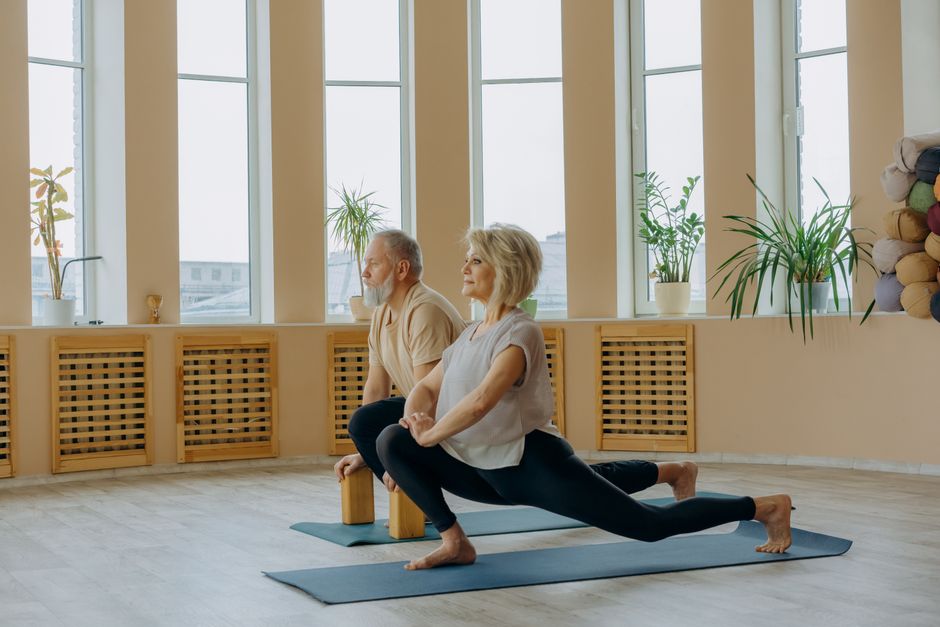
After sixty, movement matters more, not less
Age does not argue for rest; it argues for the right kind of movement. From the fifties onward, muscle quietly wastes unless it is used, joints stiffen when they stop moving through their range, and the balance reflexes that prevent falls fade without practice. Every one of these losses slows with regular gentle exercise, and yoga adapted with a chair is among the safest ways to deliver it. The chair is not an admission of weakness; it is a tool that lets an older body work honestly at stretch, strength and balance without gambling on the floor.
Choosing the chair and the setting
Use a sturdy armless chair that does not roll or wobble, a dining chair on a non-slippery floor is ideal, placed where there is clear space on all sides and a wall within reach. Wear loose clothing and practise barefoot or in socks with grip, never in loose chappals. Mid-morning often suits elders best, after the joints have loosened from the night and before lunch drowsiness. Keep drinking water within reach, and if you use a walking stick day to day, keep it beside the chair rather than across the room. Having a family member within calling distance for the first few sessions adds confidence, and confidence itself steadies balance.
Seated warm-ups: neck, shoulders, hands and ankles
Sitting tall with feet flat, turn the head slowly right and left five times each way, then tilt ear towards shoulder, moving within comfort and never forcing the stretch. Roll the shoulders backward ten times, feeling the shoulder blades slide, then stretch the arms forward and open and close the fists ten times to wake stiff fingers. Lift one foot slightly and circle the ankle five times each direction, then point and flex the foot; repeat on the other side. These small rotations lubricate the joints, literally moving synovial fluid across cartilage, and they are worth doing on their own on low-energy days.
Supported standing poses for leg strength
Stand behind the chair, hands resting lightly on its back. For supported tadasana, stand tall, press the feet down, lift the crown of the head and hold for three slow breaths. Then rise onto the toes and lower with control, ten repetitions, which strengthens the calves that push you up from chairs and stairs. Follow with gentle sideways leg lifts, five to eight per side, keeping the trunk upright, to work the hip muscles that steady every step. You should feel working muscles and mild effort; you should not feel knee pain, pinching in the hip or breathlessness beyond easy conversation.
Balance practice, because falls are the real enemy
A fall is the single event most likely to steal an elder's independence, and balance is trainable at any age. Standing beside a wall with the chair in front, shift the weight onto one leg and lift the other foot just off the floor, holding for five to ten seconds, then change sides; repeat three times each leg. Keep the fingertips grazing the chair back at first, and over the weeks reduce contact to one finger, then to hovering hands. Practise only when fresh, never after sedatives or on a wet floor, and stop the moment you feel unsteady rather than pushing through.
Finishing with breath and stillness
Return to sitting, hands on the thighs, and spend five minutes on slow breathing: in through the nose for four counts, out for six, letting the belly move softly. Bhramari, the humming exhale, suits elders particularly well because the vibration is soothing and the practice needs no breath holding. Finish with a minute of simply sitting, eyes closed, noticing the body warm and loose. Done daily, this quiet ending steadies blood pressure, mood and sleep, three things that trouble many older households more than any single joint.
Safety rules and who needs clearance first
Get a doctor's go-ahead before starting if there has been a recent fracture, fall, heart attack or surgery, severe osteoporosis, uncontrolled blood pressure, or spells of giddiness. Skip deep forward bends after hip replacement, avoid breath holding entirely, and rise from sitting slowly, since many blood-pressure medicines cause a head rush on standing. Stop any session immediately for chest pain or pressure, unusual breathlessness, dizziness, or sharp pain in a joint or the spine, and tell us about it rather than assuming it is just age. Practised within these lines, ten to twenty daily minutes can keep an elder steady on their feet for years.
Questions patients ask
My mother is 74 and has never exercised. Can she start now?
Yes, and she is exactly who benefits most. Begin with the seated warm-ups and breathing only for a fortnight, add supported standing work gradually, and get her doctor's clearance first if she has heart disease, severe osteoporosis or recent falls.
Are floor-based yoga poses unsafe for all seniors?
Not at all; many fit elders use the floor comfortably. The chair version exists for those who struggle to get down and up safely. The real rule is that getting off the floor should never be a frightening event.
How often should a senior do this routine?
Daily or near-daily, since gains in balance and strength fade quickly with rest at this age. On tired days, do only the seated warm-ups and breathing; keeping the habit alive matters more than any single session.
Suggested articles

Kapalbhati: Real Benefits, Real Cautions, Proper Technique
Kapalbhati without the hype: what the rapid-exhalation practice actually does, exact technique, who must not do it, and the signs you are overdoing it.
23 August 2026 · 4 min read
Yoga or Gym After 40? How to Split the Week
After 40 the real question is not yoga versus gym but how to split the week: what each does that the other cannot, and a workable seven-day plan.
22 August 2026 · 4 min read
Anulom Vilom: Alternate-Nostril Breathing, Step by Step
Learn anulom vilom properly: the hand position, the breathing sequence, common mistakes, who should avoid breath-holding, and how to build a practice.
22 August 2026 · 4 min read